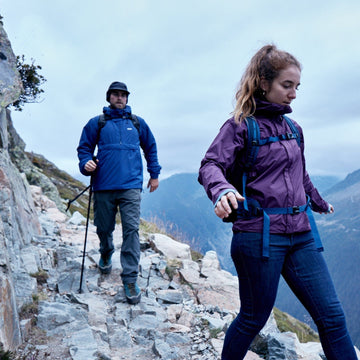






Clean, condition, reproof and store correctly. The routine that keeps leather boots performing for a decade or more.
A leather walking boot is an investment. Some boots with serious leather uppers are still going after a decade of regular use. Neglected, leather dries, cracks, and lets water through long before it should. The difference is half an hour of maintenance a few times a year. Cared for properly, even fabric boots can last for years.
Before you jump in it is important to identify if you have leather or fabric boots, and if they are leather boots - what type of leather they are.
Split leather can have the appearance of fabric boots - so you may have leather boots without knowing it! All Alpkit boots are leather.
Do not apply heavy wax treatments to split leather or nubuck footwear unless specifically recommended, as this can affect breathability, texture, and flexibility.
The Kit You Need
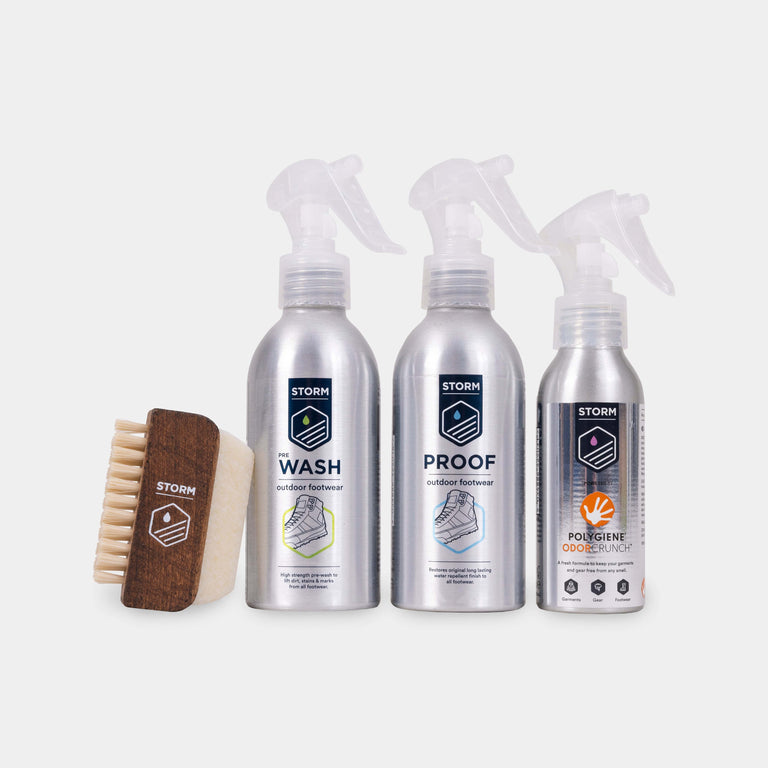
Stock up with an Alpkit Footwear Kit and the routine becomes easy. It can be used on leather and fabric boots. This includes:
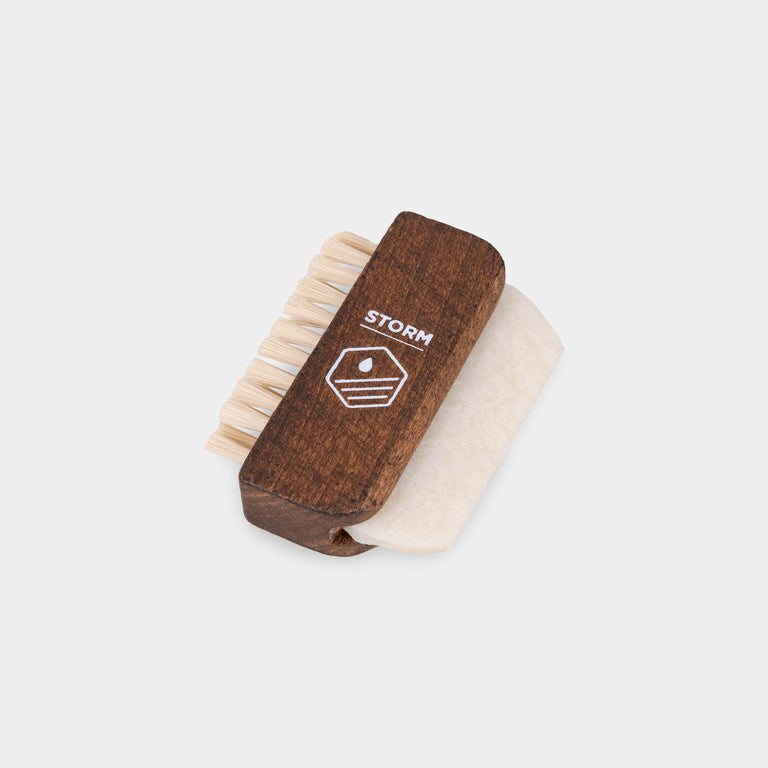
- Cleaning brush: for removing dried mud from the upper and sole
- Spray on Prewash: to help lift stains and dirt
- DWR reproofing treatment: restores water repellency to the outer surface.
Deodoriser:
- reduces bacteria and odour levels.
If you have full grain or nubuck leather boots (like Pilot) then:
Specialist leather cleaner or saddle soap: removes dirt and old conditioner without stripping the leather. Avoid household detergents, they are too aggressive
Leather conditioner: replaces oils lost through use and water exposure. Granger's G-Wax and Nikwax Leather Conditioner both work well for full-grain and nubuck; check compatibility with your boot's upper type
One important note: some silicone-based products can damage certain waterproof membranes. Check the product label against your boot manufacturer's guidance before applying anything new.
After Every Walk: Basic Cleaning
Most boot damage accumulates from neglect rather than use. A few minutes after each walk makes a real difference.
- Remove the insoles and loosen the laces. Let the boot breathe and begin to dry naturally
- Brush off mud while it is still damp. Dried mud is harder to remove and abrasive if left on the leather
- Rinse briefly with clean water if the boot is heavily soiled
- If the boot is very wet inside, stuff loosely with newspaper to absorb moisture and help it hold its shape
- Dry at room temperature, away from radiators, fires, or direct sunlight
Never use a tumble dryer, radiator, or direct heat source. Heat degrades the adhesive bonds in the sole and dries out the leather, shortening the boot's life significantly.
Periodic Cleaning and Conditioning
Leather needs conditioning roughly every five to ten walks, or whenever the leather starts to look dry or loses its slight sheen. Regular conditioning keeps the leather supple and prevents the cracking that eventually leads to water ingress.
The process:
- Clean the boot thoroughly with leather cleaner, paying attention to seams and the welt where sole meets upper
- Allow to dry to just slightly damp, not bone dry. Conditioner absorbs better into leather that retains a little moisture
- Apply conditioner with a cloth, working it into the leather in circular movements. Don't skip the tongue or the area around the ankle collar
- Leave to absorb, then buff gently with a clean cloth
For full-grain leather, a wax-based conditioner like Granger's G-Wax provides both conditioning and some surface water resistance. For nubuck, use a conditioner formulated for buffed leather, as wax can darken the nap permanently. Remember do not apply heavy wax treatments to split leather or nubuck footwear unless specifically recommended.
Reproofing: Restoring Water Repellency
The waterproof membrane inside your boot stops water getting through the upper from outside. But the membrane only works efficiently when the outer material also repels water. This outer repellency comes from a DWR (durable water repellent) coating applied to the face of the leather.
Over time, DWR degrades through use, washing, and abrasion. When it fails, water soaks into the outer leather rather than beading off. The leather becomes heavier, breathability drops, and the boot feels damp even when the membrane is still functioning.
The sign to look for: water no longer beads on the surface. When that happens, it is time to reproof.
How to reproof:
- Clean the boot thoroughly and allow to dry completely
- Apply a DWR treatment compatible with leather. Nikwax Footwear Wax and Granger's Footwear Repel are both suitable
- For wax-based treatments, apply gentle warmth (warm hands, not a heat gun) to help the product penetrate
- Buff off any excess and allow to cure before wearing
See also: How to Reproof Your Waterproof Clothing for the same principles applied to jackets and softshells.
Storing Your Boots
How you store your boots between trips matters more than most walkers realise.
Store in a cool, dry, ventilated location. Not a car boot, a garage with temperature extremes, or a damp shed. Leather reacts badly to sustained dampness and to prolonged heat.
Loosen the laces before storing to relieve tension on the upper. Use a boot tree or stuff lightly with newspaper to maintain the boot's shape. Remove insoles and store separately so both boot and insole can air fully.
When to Replace Your Boots
Even well-maintained leather boots eventually reach the end of their useful life. The signs to look for:
- Sole delamination: the sole peeling away from the upper at the welt or toe
- Cracked midsole: visible cracking in the midsole foam, often only visible if you flex the boot hard
- Failed membrane: persistent wet feet even in short rain, despite functioning DWR on the outer
- Significant upper damage: deep cuts or cracking in the leather that have been through the welt or seams
One less obvious sign: midsole compression. The midsole foam compresses invisibly over thousands of kilometres. A boot that looks fine from the outside may offer little underfoot protection if the midsole is spent. If your feet feel tired or ache after distances that used to feel easy, the midsole may be the reason.
If your boots are past their best for you but still structurally sound, they may have years of use left for someone else. The Alpkit Continuum project accepts donated footwear and passes it on to partner charities. Bring them into any Alpkit store.
Related Guides
- How to Reproof Your Waterproof Clothing
- Leather vs Synthetic Walking Boots
- How to Break In Walking Boots
- Browse boot care and insole accessories
- How to clean and care for outdoor gear - our full care guide, from waterproofs to boots
Wash, Reproof and Repair Your Outdoor Clothing
-
Sold Out
-
Sold Out

-
Sale
-
Sold Out


-
Sold Out


-
Sold Out


-
Sold Out


Nikwax Down Wash Direct
Wash-in down cleaner for revitalising your down-filled equipment and clothing
From
€8,99
€19,99


-
Sold Out

Nikwax Cotton Proof
Easy to use wash-in waterproofing for all cotton, polycotton, canvas clothing and equipment
€9,99
Your next reads