



Real life bike tyre pressures a complete guide for road, gravel and mountain bikes
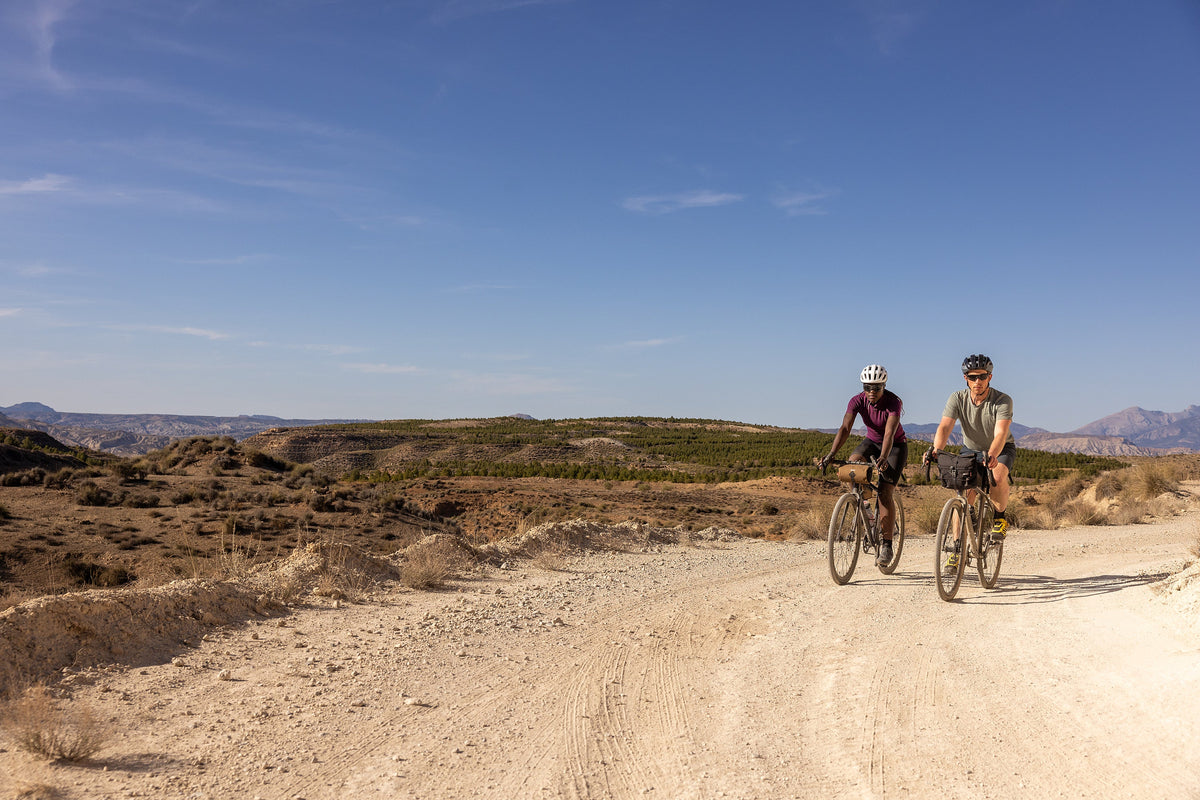


Tyre pressure isn't just a number; it's your bike's lifeline. From roads to trails, find the right balance to roll smoothly and tackle terrain with confidence.
The right pressure in your tyres makes a huge difference to your ride experience and safety. It's a generalisation to say less air is more comfortable and more air is faster.
In this guide we share our practical tips on bike tyre pressure in real life situations. Read on to unlock real PSI power. It's worth getting the basics right first too, so if you haven't already, check out our guide on how to choose the right size bike for you.
PSI, short for pounds per square inch, is a measure of pressure and is the code to unlocking optimal tyre performance. The higher the pressure the higher the PSI.
The amount of air in a a tyre has two main effects.
The first is grip. The softer the tyre the more the surface of the tyre is in contact with the ground and the grippier the ride is. But with that comes a higher risk of pinch flat punctures.
The second impact is rolling resistance. The grippier the tyre is the more friction there is and there is a higher rolling resistance. Meaning pedalling is harder work. But over-inflated tyres also increase rolling resistance as it bounces rather than rolls.
Nailing your tyre pressure - to balance grip, rolling resistance and bounce, is the key to transforming an ordinary ride into an extraordinary adventure.
Under inflated tyres can turn a ride into a hard slog. Rolling resistance is high and risk of pinch flat can ruin a day.
Over inflation means you bounce along with the risk of blow out.
Finding your sweetspot and you can ride all day, minimsing your risk of puncture, with good grip and pace for the conditions.
Pinch flats happen when an impact on the tyre causes the tyres bead to pinch the inner tybe and cause a puncture. It typically happens at lower pressures.
Run a slightly higher presuure to reduce the risk of pinch flats.
Tubeless tyres cannot have a pinch flat as there is no inner tube to pinch.
Tubeless tyres save the weight of the inner tubes and as there is no inner tube there is no risk of pinch flats.
As a result they let you run lower pressures to achieve an optimal balance between grip and rolling resistance.
More so the sealant within the tyres means many smaller punctures that are a feature of riding bikes will self seal.
Tubeless offers a significant performance improvement over inner tubes when set up right.
However for bigger punctures that can't self seal you'd need a spare inner tube to get you home.
Tubeless tyres are not maintenance free. The tyres themselves are more expensive and fitting them can be a time consuming business.
Tubeless tyres have sealant inside that needs riding in to distribute the sealant and finish the seal and benefits from regular riding.
Starting points by bike type and tyre width — fine-tune from here based on rider weight, conditions and terrain.
Beyond bike type and tyre width, conditions, rider weight and temperature all shift where your ideal pressure sits.
Maintaining a higher tyre pressure helps the bike cut through wet and mud to solid ground however many riders suggest dropping pressure by 2 to 5PSI for greater grip
More weight generally means more pressure.
Add or subtract 1 to 2PSI for every 5kg in rider and loaded weight over/under 70kg
Temperature affects air pressure. So generally run higher pressures in warmer climates compared to UK.
With modern precise pressure gauges both floor pumps and hand pumps give accurate readings to get tyre pressure dialled in.
Floor pumps do a great job. They're the pro's choice and great at home or to take in a car.
Trailside requires a small hand pump. They can change a flat on the fly. Carbon dioxide inflators accomplish the same thing if you're a CO2 kind of rider.
It's simply foolish to embark on any long distance bike ride without your trusty hand pump and puncture repair kit.
Sale


Sale


Sale
Sale
Flat Bar Best Seller


Highest customer rating


Sale


Sale


Sale
Rider Favourite


Sale


Best Seller


