



What is recycled down? How Re:Down collects, cleans and certifies old down, how it compares with new down, and how to recycle yours through Continuum.
Down is one of nature’s technical materials — light, warm, packable, and tough enough to handle long winters and cold camps. It helps you move more naturally, with less reliance on fossil fuels, to stay warm and dry in our wild places.
Recycled Down, Real Warmth: How Re:Down and Alpkit's Continuum Work Together
But what happens when a down jacket, sleeping bag or duvet reaches the end of its life?
Most people assume it goes to landfill. At Alpkit, we’d much rather it went somewhere useful. That’s why we partner with Re:Down®, and why our Continuum Project makes it easy for you to recycle unwanted down-filled kit in any Alpkit store — jackets, sleeping bags, old duvets, down pillows… all welcome.
This guide breaks down how the whole system works: how down gets recycled, why it matters, how you can take part, and where this fits in our circular design philosophy. Warmer jackets, less waste, fewer birds bred into industrial systems. Everyone wins.
Questions we’ll cover:
- What is Re:Down and how does recycled down work?
- How do I recycle my down gear with Alpkit’s Continuum Project?
- Is recycled down as warm and reliable as virgin down?
- Why is recycled down better for the environment?
In a rush? Here’s the gist:
- You can recycle any unwanted down gear through Alpkit’s Continuum Project — drop it in store or post it back for free.
- Re:Down chemically-free washes, sterilises and recovers up to 90% of down from old garments.
- Recycled down is tested to the same fill power standard as virgin down, with the same warmth, loft and durability. Our Filoment, Fantom and Zone jackets are filled with it.
- Re:Down’s process uses about 45 litres of water per kilo of down, against 170 for new down, and reduces demand for animal agriculture.
- Shell fabrics, zips and trims are separated for recycling too, so as little as possible goes to landfill.
What is Re:Down and how does recycled down work?
Re:Down® is one of Europe’s leading down recyclers. Their entire mission revolves around keeping feathers and fabrics out of landfill and giving them a second life. They collect used down items — jackets, duvets, sleeping bags — and transform the filling into clean, high-loft recycled down that performs just as well as new.
Here’s how they do it:
- Sorting and separation: Re:Down works with Iteratif, who developed machinery that chops up complex garments (like jackets) and uses a vacuum system to separate feathers from zips, cords and fabrics. Around 90% of the down is recovered.
- Chemical-free cleaning: The down is washed using simple soap and thermal cleaning — no harmful chemicals. Their Hungarian facility uses geothermal hot spring water, which is filtered and reused.
- Sterilisation: A high-temperature drying process eliminates bacteria while preserving loft.
- Repurposing everything else: Cotton shells go to the insulation industry, synthetic fabrics and trims are separated for recycling, and down too damaged to reuse becomes fertiliser.
Re:Down also meets strict traceability standards and carries Global Recycled Standard (GRS) certification. You know exactly what you’re getting — and exactly where it’s come from.


How do I recycle my down gear with Alpkit’s Continuum Project?
Continuum is our year-round take-back scheme for outdoor kit. If you’ve got old down gear — any brand, any age, any condition — we’ll take it off your hands and make sure it’s put to good use.
Here’s how to recycle down through Continuum:
- Drop it off in any Alpkit store. Just hand it to the team. No need to wash it first.
- Or post it to us for free. Continuum covers the postage — we want recycling to be easy.
- We sort and consolidate everything. Gear that can be rehomed goes to charities, schools or community groups. Anything filled with down goes into our Re:Down recycling stream.
- We ship it in bulk to Re:Down®. Bigger batches mean lower carbon and more efficient processing.
Your old jacket’s down goes back into circulation as filling for new jackets, duvets and pillows, and the rest is recycled or turned into fertiliser.
Ready to send yours? Here’s how to check it’s down and get it to us, with our free postage link and HQ address.
Is recycled down as warm and reliable as virgin down?
Yes. And that’s not marketing fluff — it’s physics.
Down works because of cluster loft: the tiny filaments that trap warm air. When Re:Down washes and sterilises recycled down, the structure doesn’t change. The clusters re-loft exactly as they would in a brand-new jacket.
Performance is identical:
- Same warmth-to-weight ratio
- Same compressibility
- Same durability and lifespan
The only thing that changes is the environmental impact — which drops dramatically.
It’s why we now use RE:DOWN in our own jackets. Read how recycled down fits into our 2026 design work.
Why is recycled down better for the environment?
Virgin down comes from ducks and geese raised for meat and eggs. Even with high welfare standards, new down is tied to energy-intensive agriculture, water use and land use.
Recycled down avoids all of this. The environmental wins are big:
- Less water: about 45 litres of water per kilo of down, against 170 for new down (Re:Down’s figures, measured by myclimate).
- Substantial carbon savings from skipping animal farming altogether.
- Less landfill: feathers, fabrics and trims each go somewhere useful.
- No harmful chemicals in the washing/sterilisation process.
- Less pressure on animal agriculture, thanks to reduced demand for virgin down.
For us, it’s simple: if a material still has life left in it, we should help it find the next one.
In summary
Recycled down is one of the cleanest, smartest uses of a natural material — and Re:Down’s chemical-free, fully traceable process means your old kit can live again with almost no downside. Through our Continuum Project, dropping off your unwanted down gear is easy, free, and genuinely impactful.
It keeps perfectly good material in circulation. It reduces pressure on agriculture. It keeps down out of landfill. And it helps us build warm, reliable gear without the unnecessary harm.
If you’re ready to recycle yours, you can do it today through our Continuum Project
Down Jackets
-
New


-
New


-
Sale


Filoment Hoody [Mens]
Ultralight and packable hooded micro-baffle recycled down jacket
From
€159,99
€189,99
-
New


-
Preorder


-
Preorder


-
Clearance
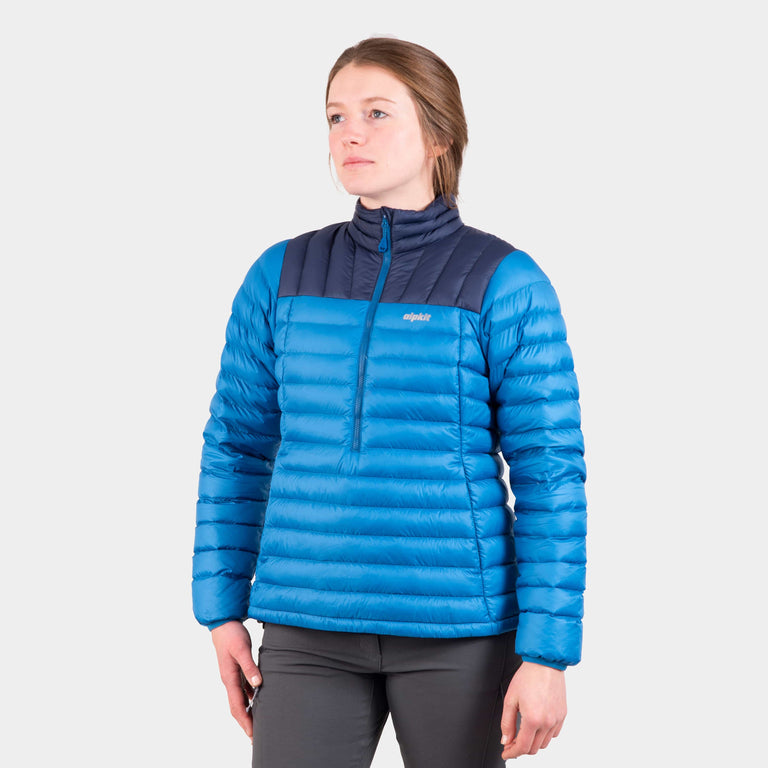


Filoment Pullover [Womens]
Performance layering top made with recycled materials to retain warmth during or after a run, ride, hike or climb
€94,99
€179,99
Your next reads