Best crash pad for bouldering: how to choose and use a bouldering mat



How thick a crash pad should be, hinge or taco, how many pads for outdoor and solo bouldering, and how to place, spot and fall. Plus our UK-made pads.
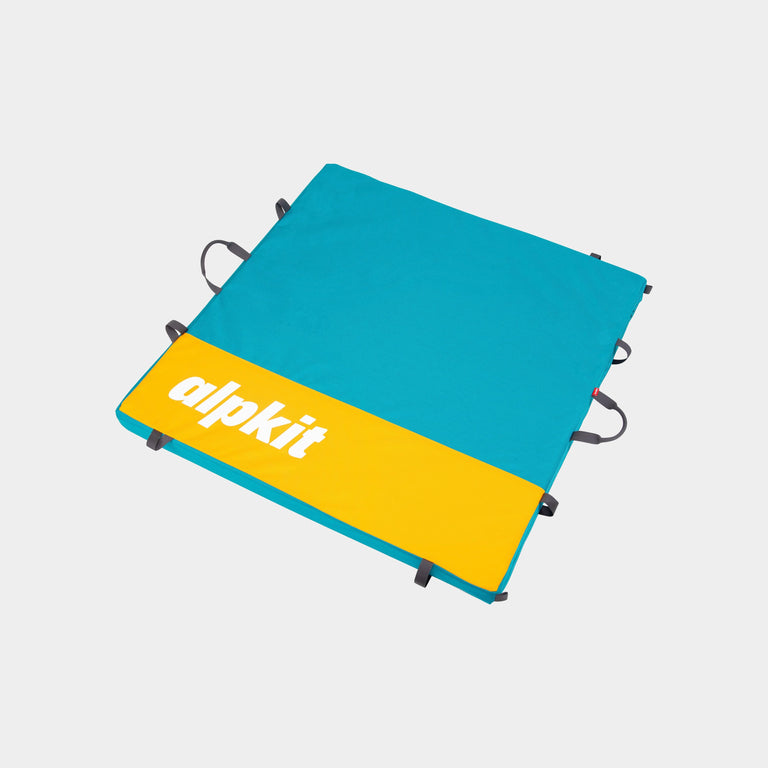
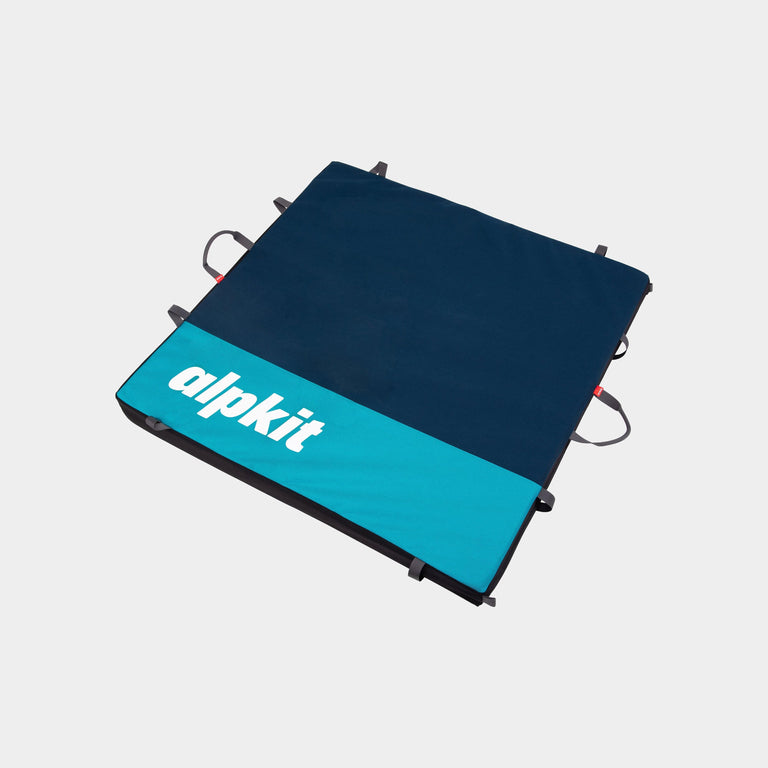
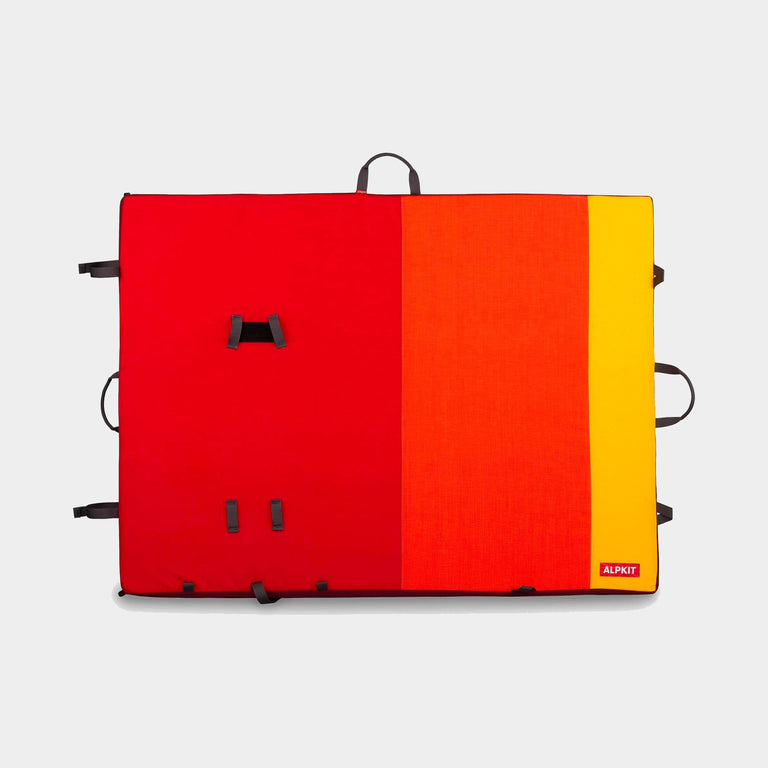
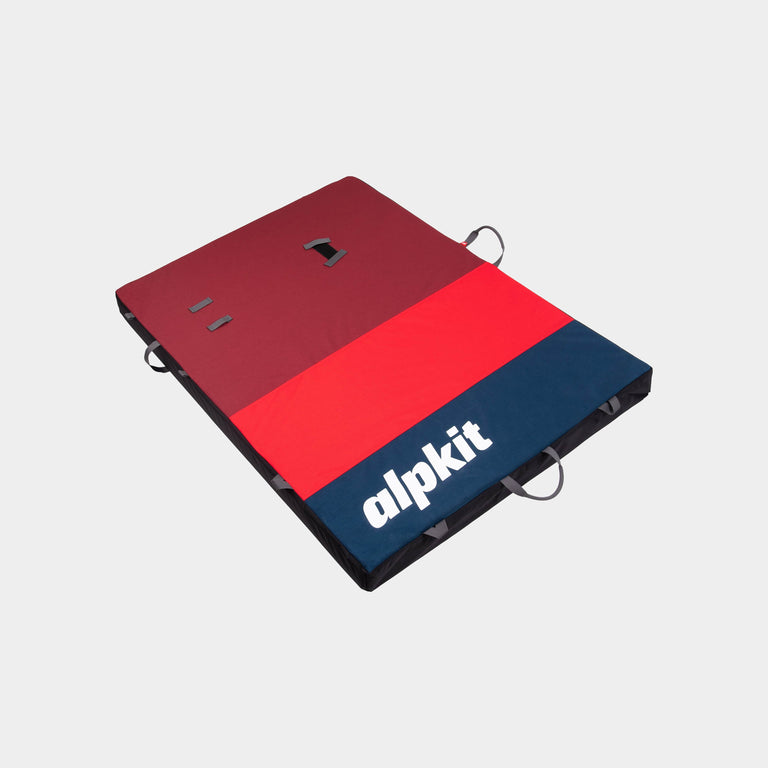
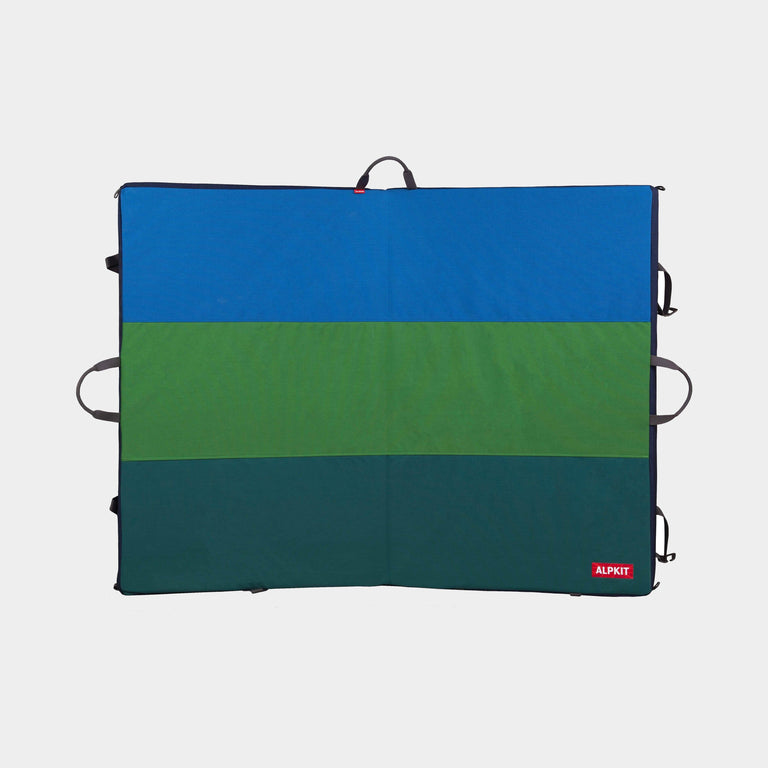
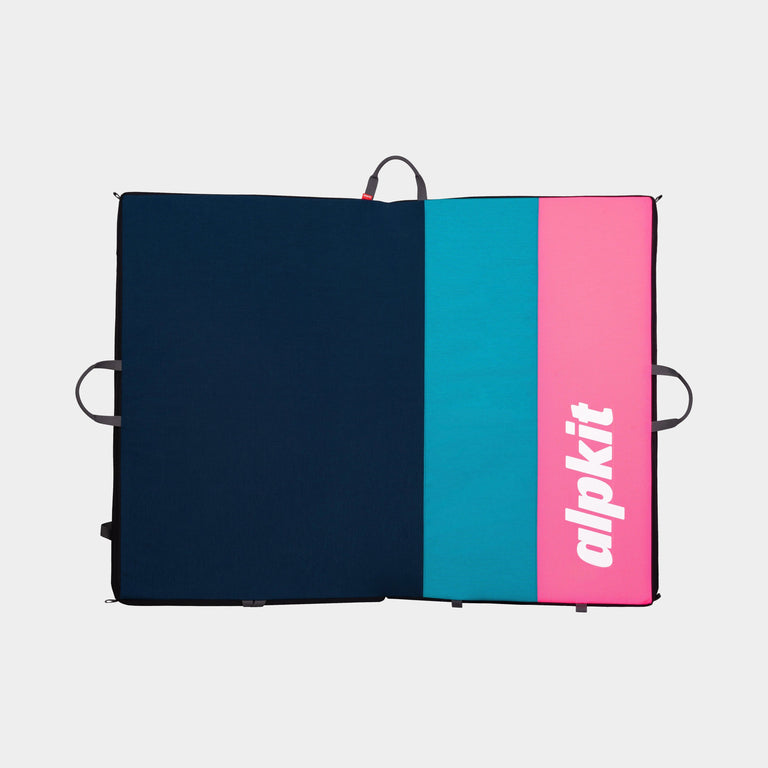
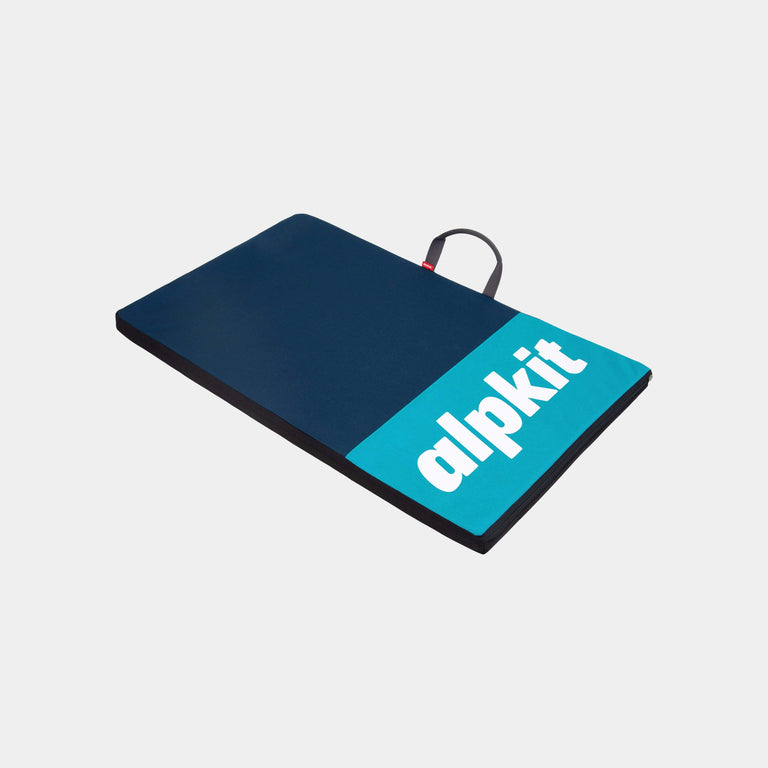
The best crash pad for bouldering covers the spot you'll land on, is thick enough that you don't bottom out on your highest falls, and is light enough to carry to the crag. For most UK bouldering outdoors that's a full-size pad 10–12cm thick. Our two main pads are both 11cm thick with about 1.3 square metres of landing. Mujo is a hinge pad that folds round rocks and packs flat. Origin is a taco pad with one unbroken landing for uneven ground. If you boulder on your own or over bad landings, take two.

In this guide
Mujo and Origin have the same foam, the same cover and the same carry system. The difference is the fold, and that changes how each pad lands and carries.
| Mujo | Origin | |
|---|---|---|
| Landing area | 100 x 132cm | 134 x 100cm |
| Thickness | 11cm | 11cm |
| Foam | 7cm open cell and 4cm closed cell, cross-linked | 7cm open cell and 4cm closed cell, cross-linked |
| Fold | Hinge | Taco, folding with the firmer landing side on the outside |
| Cover | 1100D Cordura with a DWR coating, bar-tacked in our UK factory | 1100D Cordura with a DWR coating, bar-tacked in our UK factory |
| Carrying | Removable rucksack straps and waist belt, shoulder strap, side grab handles | Removable rucksack straps and waist belt, shoulder strap, side grab handles |
| Best for | Landings with a rock or step to fold over, and a pad that packs flat in the boot | Sloping or uneven landings, and carrying your kit inside the fold |
Choose Mujo if you want a pad that folds flat in the car and can be bent round a rock or over a step in the landing. Choose Origin if your landings are mostly sloping or rough: there's no fold in the middle to catch an ankle, and it sits steady instead of rocking.
Both are full pads, made for the problems most of us climb most weekends. For a session on your own, a problem that traverses or a highball, you'll want a second pad as well. See all our bouldering mats.
A thicker pad protects you from higher falls. The risk it guards against is bottoming out: squashing the foam so far that you hit the ground through it. We find pads 10–12cm thick cover most bouldering and are still easy to carry.
Thinner, lighter pads suit low problems and moving quickly round a circuit. The thickest pads, around 15cm, are built for highballs, though height is better handled with more pads and spotters than with thickness alone.
Most pads sandwich two foams. Closed cell foam is firm and spreads your landing across the pad so you don't bottom out. Open cell foam is softer and squashes to absorb the impact. Mujo and Origin both have 7cm of open cell foam and 4cm of closed cell. The foam is cross-linked, which bonds its molecules together so it stands up better to repeated falls.
Our pads feel firm next to some others. Firm doesn't mean a harder landing. It supports your heels and ankles better, and it lasts longer. Light pads that feel hard often use additives to harden the foam, and they soften quickly, so a pad's weight is often a better sign of quality than how hard it feels. Our bouldering pad foam guide has the detail.
Landing area matters as much as thickness. A full pad of around 1 x 1.3 metres covers a fall from a problem that goes straight up. Problems that traverse, lean out or have a long move to the side need more coverage, from a second pad or from moving the pad as you climb.

A hinge pad is two blocks of foam joined by the cover, folding like a book. A taco pad is one continuous piece of foam that bends in half. Each lands and carries differently.
Hinge pads lie flat, and the two halves can be folded round a rock or over a step in the landing. They fold flat without bending the foam, so they take less room in the car. The trade-off is the join in the middle. Land on it over a hump and the pad can fold under you, so aim for one half or the other. Mujo is our hinge pad.

Taco pads give one unbroken landing with no fold to catch an ankle, which makes them better on uneven ground. Folded, they leave a space inside for shoes, chalk, a flask and spare layers. They take more room in the car and the foam bends each time you fold it, so store a taco pad open. Origin is our taco pad. It folds with the firmer landing side on the outside, so it lies flatter and doesn't rock on uneven ground.

"It's important to ask yourself what kind of days you're mostly expecting to do: volume days, or projecting days? Easy walk-ins, or long walk-ins over tricky terrain? Then, choose a pad accordingly with the biggest question being its size, especially if you're buying only one. If you don't mind having a pack in the front, hinge pads tend to be slightly more durable but if (like myself) you like having your hands free, a taco fold is a perfect solution as you can take everything you carry with you on the walk-in." - Zofia Reych
One full pad is enough for a low problem that goes straight up over a flat, clear landing. Most outdoor bouldering needs two. Take three or more for highballs and for problems over rocky or sloping ground.
Put pads where you're most likely to land, which is often not under the start. Butt them tightly together. Gaps and edges are where ankles get hurt. On a slope, check the pad won't slide when you land on it. Level a dip with another pad or a bag of soft spare layers, never anything hard. Build up a bad landing with pads rather than digging it out or moving rocks, because landings at popular crags erode quickly.


On your own, nobody moves the pad or spots you, so the coverage has to be in place before you start. Take two pads, or a full pad plus a smaller one, and set them up to cover the crux and the top-out. Either of ours works with a second pad. Origin's unbroken landing is the more forgiving if you land off-centre on uneven ground.
A pad makes falls safer, but it only works if you land on it. That comes down to where you put it, how your partners spot you, and how you fall.
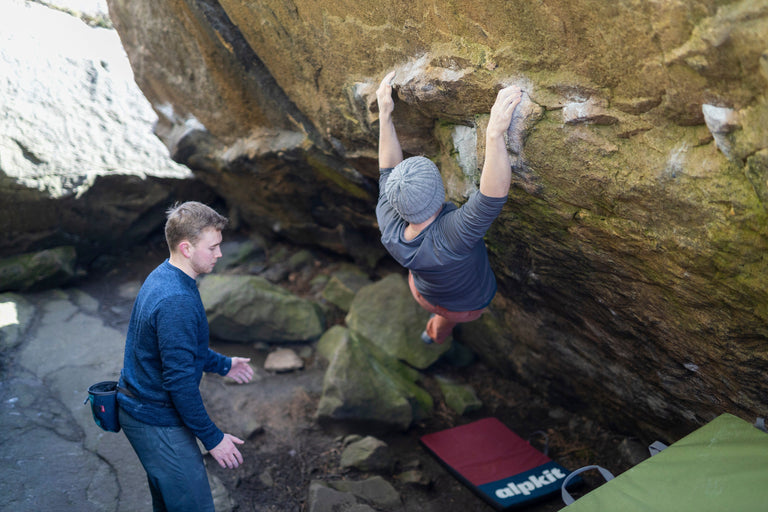
Placing the pad. Before you pull on, look at where you'd fall from each move, especially the crux and the top-out. Put the middle of the pad under that. Clear bags, shoes, brushes and flasks off the pad and away from its edges. On a traverse, have a partner move the pad along with you.
Spotting. A spotter doesn't catch the climber. Their job is to steer the fall onto the pad and stop the climber's head and back hitting the ground or the rock. Stand close, feet apart and knees soft, with your arms up and your fingers and thumbs together so your thumbs don't get caught. Aim for the climber's hips and lower back, so they land feet first on the pad. On steep problems, where a climber can swing out and go over backwards, be ready to protect their head and shoulders. Agree before the climb where you'll stand, watch the whole time, and move the pad between attempts if the fall line changes.
Falling. Land on both feet with your knees bent, then sit or roll back onto your bum. Keep your arms in: a straight arm thrown out behind you is how wrists get hurt. Practise falling from low down so it comes naturally higher up. If you can climb down or jump from a lower hold, do, and look at the pad as you go.
Highballs. Above a certain height a fall is serious whatever is under you. Highballs need more pads, more spotters, a landing you've checked from every side, and experience built on lower problems first.

Both our pads carry three ways. The rucksack straps and waist belt take the weight on a long walk-in. One strap doubles as a shoulder strap, for hanging a second pad over the first or hopping between boulders. The side grab handles let you shift the pad into position.
The straps come off, so they don't catch or get muddy while you climb. Origin's straps sit on the landing side, so you don't end up with a muddy back when you fold it to carry. With a taco pad like Origin, the rest of your kit goes inside the fold. With a hinge pad like Mujo, some people carry a small rucksack on their front.
For two pads, carry one on your back and hang the second over it using its shoulder strap. Small pads slot inside a full pad for the walk-in.
"I like when my pads attach to one another without any extra bits which get lost super easily. For example, it’s super easy to put a Mujo over a Mujo (just lengthen the shoulder straps and hook them over the top of the pad that goes on your back) or even a Mujo over the Project. The carrying system is stable enough to take the weight of two pads without feeling like it’s all going to topple over." - Zofia Reych

Foam lasts longest stored open and flat, whether your pad is a hinge or a taco. Keep it clean and dry before you put it away.
Read how one climber kept the same pad going from his 13th birthday to his ninth Font trip in a bouldering mat for life.
We've made bouldering pads in our own factory on the edge of the Peak District since 2011, and tested them on its problems. Each cover is 1100 denier Cordura with a DWR coating, sewn and bar-tacked so the seams don't split when you land. The corners are square, so pads fit together with fewer gaps. How we make our bouldering mats in the UK covers the foam, fabric and carry system in more detail.
Not sure which pad suits you? You can hire a bouldering mat from our stores and try it on your local problems first.

Sale


Sold Out
Sale


Sale
Sale
Sale


Sold Out